
High-technology Enterprise、SRDI Enterprise
 current location:home > Process documents
重庆立道新材料科技有限公司 2025-01-06 15:30:06 阅览354
Author: Li Li, Technical Department
Abstract
LD-7780 is a weakly acidic electroplating process for eutectic gold-tin alloy. It features excellent bath stability and throwing power, stable alloy ratio in the coating, precise and controllable coating thickness, good batch consistency, and capability of fabricating complex pad patterns. This paper elaborates on the LD-7780 electroplated gold-tin alloy process and its application in power semiconductor devices.
Keywords: Electroplating; Packaging; Solder; Gold-tin eutectic
1. Introduction
Electroplated gold-tin alloy is formed by electrolytic deposition of aurous and stannous ions in the plating solution onto designated positions of workpieces at a mass fraction of 80% gold (Au) and 20% tin (Sn). The coating thickness can be precisely designed according to deposition time, and it can be directly bonded with gold layers at 300℃ without flux.
At present, most AuSn20 eutectic solder pads in China adopt preformed sheets, which are manufactured by casting-drawing-rolling process and laminated cold rolling composite process. The casting-drawing-rolling process requires the addition of the third group element Pd or Pt, reducing the purity of gold-tin alloy and impairing welding performance. The laminated cold rolling composite process cannot easily control the reaction amount of gold and tin; unalloyed gold or tin will adversely affect the solder. Pads applied in microelectronics, optoelectronics and MEMS sensors generally only require a thickness of 3~5 μm, while the thickness of AuSn20 alloy strip prepared by multilayer cold rolling of Au and Sn ranges from 0.025 to 0.10 mm. The thinnest available preformed sheet is 25 μm, and the alloy is brittle, making microfabrication impossible. It also cannot meet the requirements of complex patterning, precise positioning and wafer-level bumping. Some domestic research institutes have conducted studies on sputtering and thermal evaporation methods, but the maximum thickness of the film layer prepared by these methods is only several thousand angstroms, making further thickening difficult. In addition, they require high investment costs and cause severe waste of precious metal materials.
Electroplated gold-tin solder has attracted extensive research attention due to its convenience and cost-effectiveness. Electroplated deposition enables selective electroplating via photoresist, improving the utilization rate of expensive gold-tin solder, allowing the preparation of brazing layers in various shapes, and achieving precise thickness control of the solder layer. Eutectic gold-tin electroplating can be realized by adding a certain amount of chelating agents to simplify the electroplating process. However, electroplating conditions require strict control, especially precise regulation of current density, which places high demands on the long-term stability of the plating bath. This paper introduces a novel electroplated gold-tin alloy process and its application in power devices.
2. Electroplated Gold-Tin Alloy Process
2.1 Process Characteristics
LD-7780 is a weakly acidic eutectic gold-tin alloy electroplating process with outstanding bath stability and throwing power. It delivers stable alloy proportion in coatings, accurate and controllable thickness, excellent batch consistency, and can fabricate complex pad patterns. It is highly suitable for ceramic packaging sealing of electronic devices, chip bonding, ceramic insulator welding for metal packaging, and chip welding of high-power semiconductor lasers, significantly improving packaging reliability, electrical conductivity and thermal conductivity of these devices.
2.2 Solution Composition
Material Name | Optimum Value | Rang |
Potassium gold cyanide LD-7780M LD-7780Sn | 8g/L 600ml/L 40ml/L | 4~12g/L 550~750ml/L 20~60ml/L |
2.3 Solution Preparation Procedure (10L)
1.Thoroughly clean the electroplating tank and fill it with 2L deionized water or distilled water;
2.Add 6L LD-7780M make-up agent under stirring;
3.Dissolve 100g potassium gold cyanide with deionized water, add it to the above solution and stir evenly;
4.Add 40ml LD-7780Sn under continuous stirring;
5.Dilute the solution to 10L with deionized water or distilled water.
2.4 Process Parameters
Item | Optimum Value | Range |
Gold Content(g/L) | 5 | 2~8 |
Tin Content(g/L) | 8 | 5~20 |
LD-7780W | Stabilizer replenishmen | |
Temperature(℃) | 35 | 30~40 |
pH(25℃) | 5.5 | 4.5~6.5 |
Specific Gravity(25℃) | 16°Bé | 13~20°Bé |
Minimum Coating Thickness | 1μm | |
Current Density | High 0.8 A/dm2 | 0.5~1A/dm2 |
Low 0.1A/dm2 | 0.05~0.15A/dm2 | |
2.5 Process Maintenance
Regularly analyze the gold content and maintain it within the recommended concentration of 2~8g/L; tin content should be kept at 5~20g/L. The pH value shall be controlled between 4.5 and 6.5. To lower pH, add LD-7780 acid salt; to raise pH, add chemically pure ammonia water. The specific gravity of the solution should remain at 13~20°Bé. In case of excessive solution overflow or specific gravity dropping below 13°Bé, add LD-7780R conductive salt to restore the specific gravity above 13°Bé.
Metal contamination may affect the operation of LD-7780 plating solution. Therefore, prevent the introduction of metal impurities by properly rinsing plated parts and pre-dipping in plating solution before gold electroplating. When the plating solution is left idle for a long time, add 1~2ml/L LD-7780W for effective stabilization. Meanwhile, replenish 1~2ml/L LD-7780W if the solution darkens during use, which can restore the solution to normal state immediatel
2.6 Coating Performance Test
2.6.1 Alloy Ratio Test of Different Gold-Tin Coatings
After gold-tin alloy electroplating on patterned 50mm×50mm ceramic substrates, the coating thickness and alloy ratio of each area were tested by X-ray fluorescence. The gold content at each testing point is stably maintained at 80%±2.
Thickness/μm | Au/% | Sn/% |
6.33 6.32 6.41 6.57 6.40 6.59 6.58 6.48 6.61 5.24 5.25 5.14 | 80.5 80.9 78.3 79.0 77.7 78.5 77.2 77.8 81.2 80.3 79.6 81.5 | 19.5 19.1 21.7 21.0 22.3 21.5 22.8 22.2 18.8 19.7 20.4 18.5 |
2.6.2 Coating Solderability Test
A sputtered conductive seed layer was deposited on an alumina substrate, followed by photoresist patterning, copper electroplating,gold electroplating and gold-tin alloy electroplating. Finally, the sample was cut into small substrates for testing. The heating platform was set at 300℃, and the gold-tin alloy coated small substrate was placed on the platform to observe reflow behavior. The test results showed obvious eutectic reflow phenomenon occurred within about 10 seconds after placing the substrate on the heating platform.
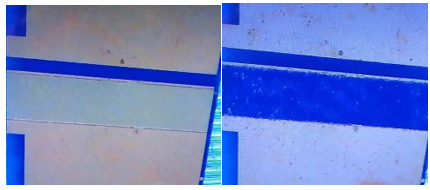
Figure 1. Amalgamation image of the Au-Sn eutectic alloy.
3、Applications of Electroplated Gold-Tin Alloy
3.1 Laser Diode Packaging
With the popularization of laser processing, power laser diodes have been widely applied. Advances in packaging and chip technologies have continuously increased the power of laser diodes, resulting in extremely high heat flux density. The luminous efficiency of laser diodes decreases with rising temperature, so heat dissipation during operation is critical. Adopting gold-tin eutectic alloy solder for packaging can effectively solve heat dissipation problems. The gold-plated bottom of the chip can be directly bonded to the gold-tin eutectic coated packaging surface of the heat sink without preparing transitional metal layers. In addition, gold-tin alloy has a high Young's modulus; even at a thin thickness of 5-25μm, it can maintain flatness and flexural rigidity, greatly reducing the possibility of pore inclusion in the solder layer during welding and improving the heat dissipation performance and reliability of laser diodes.
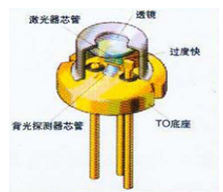
Figure 2. Schematic diagram of the TO laser package structure.
3.2 Optoelectronic Packaging
Fiber ferrules are key passive devices in optical communication. For pigtail packaging of fiber ferrules, a gold layer is first electroplated on a nickel tube, then the gold-tin eutectic coated fiber end is inserted into the gold-plated nickel tube, and the pigtail is welded to the nickel tube by hydrogen flame. After aluminum nitride substrates are coated with gold-tin alloy, optoelectronic chips can be bonded onto the substrates.
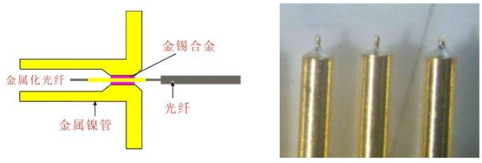
Figure 3. Ferrule pigtail packaging of optical fiber.
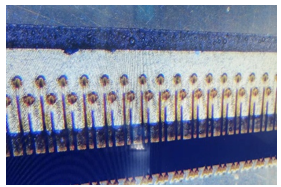
Figure 4. Soldering of the optoelectronic chip.
3.3 LED Chip Packaging
Improving the heat dissipation capacity of high-power LEDs is the core issue in LED device packaging and application design. Common substrate bonding materials for chips include thermal conductive adhesive, conductive silver paste, tin paste and gold-tin alloy solder. Gold-tin alloy solder exhibits the optimal thermal conductivity and excellent electrical conductivity among the four materials. Featuring high thermal conductivity and relatively high melting point, 80Au20Sn eutectic alloy used as LED die bonding material can significantly reduce the interfacial thermal resistance between the chip and heat dissipation base. The flat gold-tin alloy layer under the chip is only 3μm thick, which requires high precision of eutectic bonding equipment and low substrate surface roughness (Ra) and height difference (PV).
For high-power LED chip packaging with L-shaped electrodes, a gold-tin alloy layer is pre-deposited on the silicon carbide substrate (usually completed by chip manufacturers), and another gold-tin alloy layer is electroplated on the heat sink. The metal layers on the LED chip base and heat sink are fused together to realize eutectic welding.
There are two manufacturing methods for high-brightness LEDs based on gallium nitride: gold-gold thermocompression bonding and gold-tin eutectic bonding. The former requires a bonding temperature of 250℃ to 400℃, pressure of 1 to 7 MPa, and duration ranging from several minutes to hours. Lower temperature requires longer time and higher pressure; insufficient time and pressure lead to partial bonding between wafers. Gold-tin eutectic bonding achieves adhesion through solid-liquid diffusion to form intermetallic compounds. One wafer is coated with a thin gold layer, and the other is deposited with a 5μm-thick gold-tin layer. Wafer bonding is carried out in nitrogen-hydrogen mixed gas (95%N₂, 5%H₂). This method only requires low pressure and a temperature slightly higher than the melting point, completing bonding within several minutes
3.4 Wafer Bonding
Ultrasonic interface images of 4-inch germanium wafers bonded with gallium arsenide wafers via gold-tin alloy show uniform bonding across the entire interface (dark blue represents well-bonded areas). Acoustic images of 2-inch grid-patterned sapphire wafers bonded with 2-inch silicon wafers via gold-tin alloy are also presented (light gray for bonded devices, black stripes for device separation channels).
The application of Au-Sn alloy in high-power LEDs involves a series of characteristics including solderability, melting temperature, Young's modulus, thermal expansion coefficient, Poisson's ratio, strain rate and corrosion resistance to ensure packaging reliability; otherwise, devices may fail prematurely due to overheating or insufficient mechanical strength at joints.
Traditional front-mounted chips adopt gold ball bumping or gold wire bonding, with a single chip having nearly 20 bumps that need individual preparation, resulting in low production efficiency. C-LED technology can electroplate all bumps on the entire wafer at one time and perform wafer-level welding, effectively improving production efficiency and reducing manufacturing costs. Wafer bump fabrication is the core of solder bump flip-chip technology.
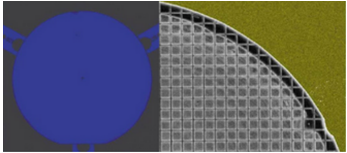
Figure 5. Ultrasonic image of Au-Sn eutectic bonding on the wafer.
4 Au-Sn Alloy Bump Forming Method
Firstly, metal is sputtered on the entire wafer surface, followed by photoresist coating. A mask is used to define bump patterns, and the wafer is used as the cathode for bump electroplating. The electroplated solder is deposited higher than the photoresist to form mushroom-shaped tops and achieve the preset bump height. During wafer reflow, the molten solder forms spherical solder bumps under surface tension. Spherical bumps enable precise alignment during welding and uniform current density in service.
The electroplating method for bump preparation features low cost, simple equipment and raw material saving, which is of great significance for white light HB-LED lighting. Flip-chip technology is an effective means for white light HB-LED packaging, and chip bump fabrication is one of its key technologies. Economical, rapid and efficient preparation of 80wt%Au-20wt%Sn eutectic bumps with excellent performance is the key to flip-chip packaging. At present, gold-tin bumps are mostly prepared by layered electroplating of pure Au and pure Sn; direct gold-tin alloy electroplating shows more obvious advantages.
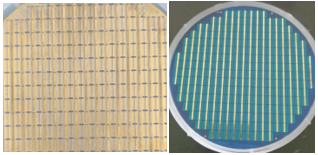
Figure 6. Pattern of Au-Sn alloy on silicon carbide.
5 Conclusion
Au80Sn20 eutectic alloy possesses superior properties such as moderate melting point, high strength, flux-free welding, excellent thermal and electrical conductivity, good wettability, low viscosity, easy weldability, corrosion resistance and creep resistance. It is widely applied in ceramic packaging sealing, chip bonding, ceramic insulator welding for metal packaging, and chip welding of high-power semiconductor lasers in microelectronic and optoelectronic devices, effectively enhancing packaging reliability as well as electrical and thermal conductivity.
The electroplating method enables precise thickness control from 1μm to tens of micrometers, with high processing efficiency and good batch consistency. It can fabricate wafer bumps and complex pad patterns via photolithography, meeting the miniaturization development demand of electronic technology.
References
[1] Wu Yiping. Research Progress of Gold-Tin Alloy Solder[J]. Global SMT & Packaging
[2] Zhang Jing, Xu Huiwu, Li Xueyan, et al. Study on Electroplated Au-Sn Alloy[J]. Semiconductor Technology, 2009,34(11):1066-1069
[3] Shi Chao. Study on Properties and Preparation Methods of Gold-Tin Eutectic Solder in Semiconductor Packaging Process[J]. World Nonferrous Metals, 2018(4):216-217,219
[4] Li Jinlong, Tan Kankan, Zhang Zhihong, et al. Application and Research Progress of AuSn Alloy in Electronic Packaging[J]. Microelectronics, 2012,42(4):539-545

