
High-technology Enterprise、SRDI Enterprise
 current location:home > Process documents
重庆立道新材料科技有限公司 2026-06-03 09:49:01 阅览94
Author: Xiao Chunyan, Li Yangbin, Technical Department
Abstract
This paper introduces the process characteristics of LD chromium-free and cyanide-free copper stripping solution. A systematic study is carried out on its copper stripping rate, service life, surface appearance of various steel substrates and hydrogen embrittlement influence on base metals, alongside a comparative test against chromic acid-based copper stripping process. Test results prove that the LD process is environmentally friendly and safe with no chromate or cyanide contained, eliminating severe pollution and troublesome wastewater treatment drawbacks of traditional chromate stripping. Compared with chromic acid stripping, its stripping efficiency is approximately 1.5 times higher. The substrate surface remains intact consistent with the original state before copper plating after stripping, and the risk of substrate hydrogen embrittlement is significantly reduced.
Keywords: Chromium-free & Cyanide-free Copper Stripping; Copper Stripping Rate; Substrate Surface Appearance; Hydrogen Embrittlement Effect
1. Preface
Conventional domestic copper stripping mostly adopts chromic acid system composed of chromic anhydride and sulfuric acid. This traditional process features simple composition, fast stripping speed and easy operation, yet hexavalent chromium is highly toxic and causes severe environmental pollution with high-cost wastewater disposal. As a heavy metal, chromium brings great hazards to ecological environment and occupational hygiene, subject to strict emission limits specified by EU RoHS directive and China’s electroplating pollutant discharge standard GB21900-2008 for total chromium and Cr⁶⁺. Currently, chemical precipitation is the mainstream treatment for chromium-containing wastewater, which converts soluble chromium into chromium-bearing sludge that triggers secondary pollution and is also under stringent state supervision.
Copper stripping is mainly applied to remove unqualified electroplated copper coatings and protective copper layers for thermal chemical treatments including carburization prevention, nitriding and carbonitriding. Common substrates cover carbon steel, alloy steel, stainless steel and superalloy, generating massive volume of stripping wastewater annually with expensive treatment expenses. Against the drawbacks of severe pollution and difficult wastewater treatment of chromate stripping, developing eco-friendly chromium-free and cyanide-free copper stripping technology bears important practical significance. The LD chromium-free cyanide-free chemical copper remover is free of chromate and cyanide, capable of rapidly stripping electroplated copper from steel substrates without substrate corrosion, featuring high stripping efficiency and green production. This paper focuses on application research of the LD stripping process.
2. Brief Introduction to LD Chromium-free & Cyanide-free Copper Stripping Process
Temperature imposes prominent impact on stripping rate: stripping proceeds slowly below 40℃ while excessive temperature causes rapid solvent volatilization, with optimal operating temperature controlled at 50~60℃.
Technological Flow
Organic solvent degreasing → Rack loading → Chemical degreasing → Hot water rinsing → Running cold water rinsing → Copper stripping → Running cold water rinsing → Unloading → Air drying → Hydrogen relief baking → Inspection
Table 1 Technical Parameters of LD Copper Stripping Process
Item | Specification Range |
LDStripping Powder | 200g/L |
pH | 11~14 |
Temperature | room~60℃ |
Agitation | Air agitation or workpiece movement |
3. Application Performance of LD Stripping Process
3.1 Copper Stripping Rate Test
Test bars made from 9310 steel, 16Cr3NiWMoVNbE steel and 30Ni4CrMoA steel were plated with copper coatings of 10~15μm, 30~40μm and 50~60μm thickness respectively. Comparative stripping experiments were performed using newly prepared LD solution and conventional chromic anhydride-sulfuric acid stripping liquor. Test data in Table 2 verifies LD stripping speed is markedly superior to chromic acid process with around 1.5-fold efficiency improvement.
Table 2 Time Required for Complete Copper Coating Removal (min/h)
Coating Thickness/um Stripping Solution | 10~15 | 30~40 | 50~60 |
LD Stripping Solution | 8~15 min | 20~35 min | 40~60 min |
Chromic Acid Solution | 15~30min | 2~3 h | 3.5~4h |
3.2 Substrate Corrosion Resistance Evaluation
Common stripped substrates include carbon steel, alloy steel, stainless steel and superalloy. Five typical grades (18CrNi4A, 60Si2MnA, 1Cr11Ni2W2MoV, GH2132 and 45# steel) were selected to test substrate corrosion via weight loss measurement, macro/micro morphology observation and galvanic corrosion inspection in LD stripping bath.
3.2.1 Uniform Corrosion Weight Loss Test
In accordance with JB/T7901-1999 and JB/T16545-2015 standards, standard specimens sized 60×60×3 mm were fully immersed in LD solution at 50±1℃ for 48 h. Test flow: Organic degreasing → Racking → Chemical degreasing → Hot & cold rinsing → 48h immersion → Rinsing → Drying → Morphology shooting → Weighing.
Macro and metallographic morphology before and after immersion were recorded, with weight loss and corrosion rate summarized in Table 3. No obvious macroscopic corrosion was observed for all five materials after 48-hour soaking; only negligible micro-corrosion traces appeared on 60Si2MnA and 1Cr11Ni2W2MoV under metallographic examination.
Corrosion rate calculation formula:
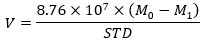
Where:V ---- corrosion rate, mm/yr;
Mo ---- Specimen mass before test,g;
M ---- Specimen mass after test,g;
S ---- Total specimen area,cm2;
T ---- Immersion duration,h;
D ---- Material density,kg/m3。
Calculation results show that the corrosion rates of the five materials in the LD chromium-free and cyanide-free stripping solution range from 0.028 to 0.041 mm/year, or 0.15 to 0.23 μm per 48 hours.
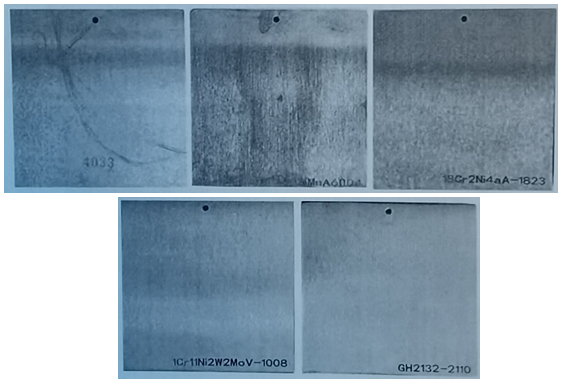
Figure 1 Macro-morphology of five materials after 48 h immersion in LD copper stripping solution
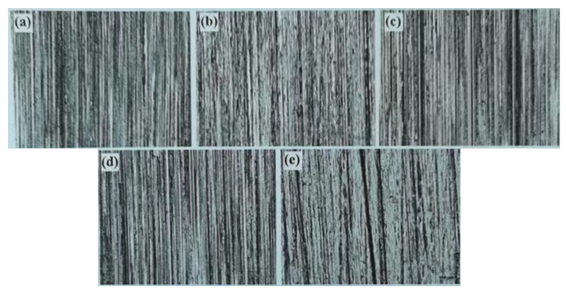
Figure2 Figure 2 Metallographic microstructure of five materials before immersion in LD stripping solution
(a)45# steel,(b)60Si2Mn steel(c)18CrNi4A steel,(d)1Cr11Ni2W2MoV steel,(e)GH2132 steel
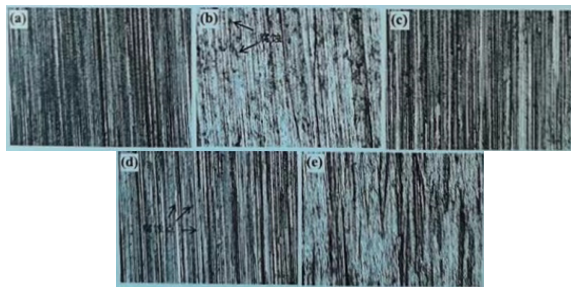
Figure 3 Metallographic morphology of five materials after 48 h immersion in LD copper stripping solution
(a)45# steel,(b)60Si2Mn steel,(c)18CrNi4A steel,(d)1Cr11Ni2W2MoV steel,(e)GH2132 steel
Table 3 Weight Loss and Corrosion Rate after 48h Immersion
Material | before test M0/g | after test M1/g | Weight Loss /g | Corrosion Rate mm/yr | Corrosion Rateµm/48h |
45# | 83.7789 | 83.7694 | 0.0095 | 0.028 | 0.15 |
60Si2MnA | 87.7683 | 87.7545 | 0.0138 | 0.041 | 0.22 |
18CrNi4A | 87.6449 | 87.6351 | 0.0098 | 0.029 | 0.16 |
1Cr11Ni2W2MoV | 88.6846 | 88.6752 | 0.0094 | 0.028 | 0.15 |
GH2132 | 89.0793 | 89.0688 | 0.0105 | 0.031 | 0.17 |
Conclusion: The LD copper stripping solution has low corrosiveness toward the five typical copper-plated substrate materials. After 48 hours of immersion test in the solution, the macroscopic morphology of all five materials remains nearly unchanged with no obvious corrosion observed.
3.2 Galvanic Corrosion Test of Copper-Plated Specimens of Five Grades in LD Cyanide-free Stripping Solution
Standard corrosion specimens sized 60×60×3 mm were adopted. Each specimen was half-plated with copper up to the maximum specified thickness of 80 μm while the other half was kept bare, then suspended in LD stripping liquid for stripping. Complete removal of the 80 μm-thick copper coating took 1–1.5 h, followed by another 6 h of continuous immersion to investigate galvanic corrosion during stripping.
Test Procedure
Organic solvent degreasing → masking of unplated area → rack mounting → chemical degreasing → hot water rinse → running cold water rinse → copper plating (≥80 μm) → 6 h immersion in LD stripping solution → running cold water rinse → unloading → air drying → photographing and weighing.
The surface appearances after copper plating and metallographic morphologies after 6-hour stripping immersion are presented in Figure 4 and Figure 5. Test results demonstrate no evident corrosion at the boundaries between copper-coated and bare substrate regions for all five specimen groups.
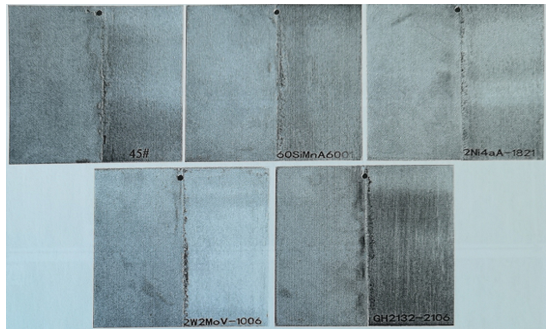
Figure 4 Appearance of five materials after copper plating
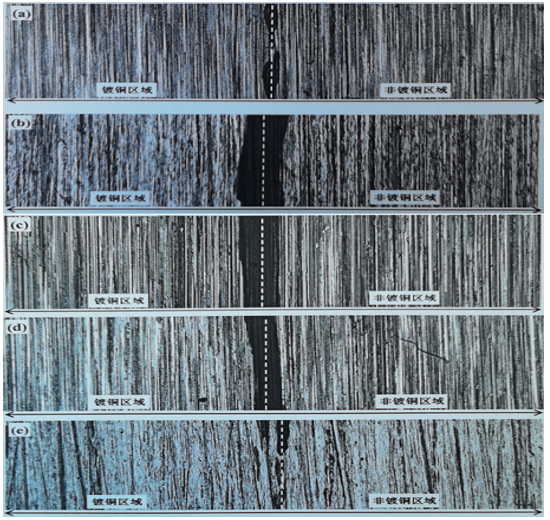
Figure 5 Metallographic microstructure of copper-plated specimens of five materials after 6 h immersion in LD copper stripping solution
(a) 45# steel; (b) 60Si2Mn steel; (c) 18CrNi4A steel; (d) 1Cr11Ni2W2MoV steel; (e) GH2132 alloy
Conclusion: No galvanic corrosion occurs on the five typical materials including 45# steel, 60Si2Mn steel, 18CrNi4A steel, 1Cr11Ni2W2MoV steel and GH2132 alloy during stripping in the cyanide-free LD solution.
3.3LD Hydrogen Embrittlement Assessment on Substrate
ASTM F519-18 standard was adopted for hydrogen embrittlement test with 4340 steel tensile specimens coated by 8~12μm copper layer. Specimens received pre-plating stress relief and post-stripping hydrogen relief (190±10℃, 24h holding). All test samples were loaded at 75% of rated tensile strength for continuous 200h; specimen without fracture was defined as qualified against hydrogen embrittlement.
Test flow: Organic degreasing → Stress relief → Plating → LD copper stripping → Rinsing → Drying → Dehydrogenation → Tensile endurance test.
All six tested specimens survived continuous 200-hour loading without fracture. From chemical reaction mechanism, neither LD nor chromic acid stripping generates hydrogen gas during reaction, resulting in low hydrogen embrittlement risk for base metal.
Conclusion: LD process passes hydrogen embrittlement qualification test.
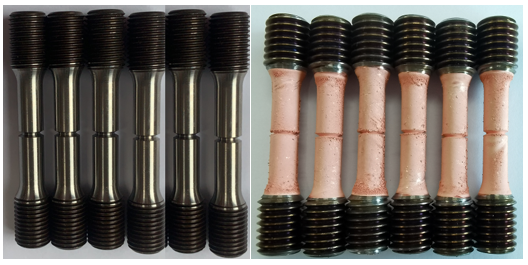
Figure 6 Appearance of tensile specimens before and after copper plating
Metal coatings can be stripped from iron substrates via two approaches: chemical stripping and electrolytic stripping. Chemical stripping solutions commonly consist of oxidants, complexing agents, corrosion inhibitors and buffering agents. Fundamentally, chemical stripping relies on oxidants to oxidize the metallic coating into metal ions, which subsequently form soluble complexes with complexing agents to stabilize solution chemistry and interfacial reactions. Once the coating dissolves to expose the iron substrate, inhibitors adsorb onto the base metal to form an anticorrosive film.
As the core constituent, oxidants serve to oxidize coating metals. High-affinity complexing agents dissolve large amounts of coating metal per unit volume, reduce free metal ion concentration and anodic interfacial activation energy to accelerate stripping; certain complexants also adsorb on iron surfaces for corrosion protection. Buffers stabilize bath pH to sustain consistent stripping rate and avoid substrate corrosion.
Conventional chromic acid stripping solution is formulated with chromic anhydride and sulfuric acid. Its redox reactions during copper stripping are listed below:
Reduction reaction:CrO3+3e+6H+=Cr3++H₂O
Oxidation reaction:Cu=Cu2++2e
Overall reaction:2 CrO3+3Cu+6H2SO4=Cr2(SO4)3+3CuSO4+6H2O
The LD copper stripping solution is mainly composed of sodium m-nitrobenzenesulfonate, polymeric thiocyanate[Y]3- , sodium hydroxide and other components, and the structural formula of potassium polymeric thiocyanate is shown in Figure 7. The stripping mechanism is as follows: under alkaline conditions, sodium m-nitrobenzenesulfonate oxidizes the copper coating, and the generated copper ions are complexed by polymeric thiocyanate[Y]3- . Meanwhile, polymeric thiocyanate shifts the potential of copper coating toward negative direction to facilitate activation and dissolution of the coating. The redox reactions occurring in the copper stripping process are shown below:
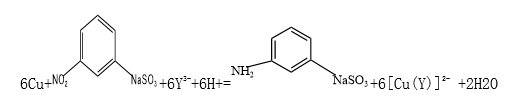
In accordance with the copper stripping reaction mechanism, neither LD nor chromic acid stripping solution generates hydrogen during stripping. Therefore, the LD process carries a low risk of inducing hydrogen embrittlement on the substrate。
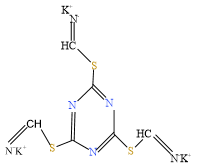
Figure 7 Structural Formula of Potassium Polymeric Thiocyanate
Conclusion: The LD chromium-free and cyanide-free copper stripping process passes the hydrogen embrittlement test for substrates.
3.4 Solution Consumption & Service Life
To investigate the consumption and service life of LD stripping solution, the copper removal capacity versus treatment time was tested with equal volumes of LD solution and chromic acid solution. 9310 steel specimens (Φ20 mm × 120 mm) were electroplated with copper coating over 50 μm thick, and nine fully-plated samples were immersed separately in 1 L LD bath and 1 L chromic acid bath for stripping tests.
The initial weight of copper-plated specimens was weighed by electronic balance and marked as W0 (g). At regular intervals, specimens were taken out and weighed on an analytical balance to obtain W1, W2…Wn. The removed copper mass and stripping rate at different stages are summarized in Table 4 and plotted in Figure 8.
Test results indicate LD achieves faster copper stripping, roughly 1.5 times the rate of chromic acid at the early stage. The chromic acid bath becomes ineffective when dissolved copper accumulates to about 31 g/L. By contrast, LD has a longer service life: its stripping efficiency drops sharply at approximately 19 g/L copper, with the average stripping rate falling below one-tenth of the initial value accompanied by substantial precipitates within subsequent 24 h; the solution nearly loses efficacy once copper content exceeds 35 g/L.
Table 4 Copper removal mass at different stripping time for 1 L LD and chromic acid stripping solutions
Time/h | LD copper stripping g/L | Chromic Acid Bath g/L |
0 | 0 | 0 |
1 | 19.76 | 13.00 |
2 | 22.03 | 21.41 |
3 | 22.98 | 25.00 |
5 | 24.80 | 28.90 |
7 | 26.55 | 30.38 |
10 | 29.00 | 31.20 |
12 | 30.40 | 31.35 |
18.5 | 32.58 | 31.35 |
25.5 | 35.66 | 31.35 |
36.5 | 39.64 | 31.35 |
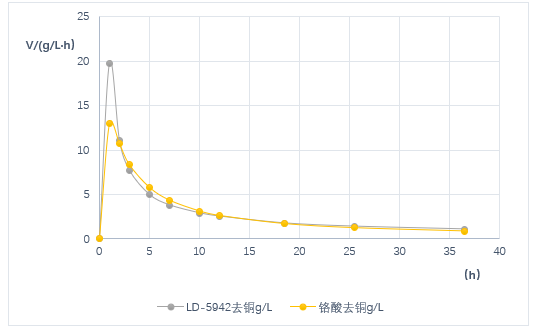
Figure 8 Copper Stripping Rate of LD Solution and Chromic Acid Solution
Conclusion: LD solution features faster stripping rate and longer service life than conventional chromic acid bath with ~1.5 times higher stripping efficiency.
3.5Daily Maintenance Specification of LD Stripping Solution
1)Optimal working temperature: 50~60℃; slow stripping below 40℃, excessive solvent evaporation above 70℃.
2)Air agitation or workpiece movement is recommended, doubling stripping speed compared with static immersion.
3)Initial stripping rate of fresh bath: 40~70μm/(dm²·L·h); add 50g/L stripping powder when speed reduces to half of nominal value.
4)Partial solution replacement is required at ~25g/L dissolved copper; full bath renewal when copper concentration hits around 40g/L.
4. Overall Conclusions
1)LD chromium-free cyanide-free copper stripper is eco-friendly without chromate and cyanide, eliminating high pollution and costly wastewater treatment of traditional chromic acid stripping technology.
2)Stripping efficiency of LD process is about 1.5 times higher than chromic acid stripping.
3)LD stripping causes no damage to substrate appearance, the base metal retains original surface condition after copper removal, meanwhile effectively lowering substrate hydrogen embrittlement risk.

