High-technology Enterprise、SRDI Enterprise
 current location:home > Process documents
重庆立道新材料科技有限公司 2026-06-02 16:19:49 阅览108
Technical Department: Liu Jun, Xiao Chunyan
Abstract
Zn-Ni alloy coating features nearly no hydrogen embrittlement and excellent corrosion resistance, with coating hardness higher than 300 HV. By comparing the properties of Zn-Ni alloy coating and Dacromet coating, this paper focuses on the analysis and research of appearance, thickness, nickel content, adhesion, hardness and corrosion resistance. The results show that the performance of Zn-Ni alloy coating is much better than that of Dacromet coating, making it an ideal alternative to Dacromet process for fasteners of special vehicles in our company.
Keywords: special vehicle fasteners; Zn-Ni alloy coating; Dacromet; hardness; adhesion; corrosion resistance
0 Introduction
Special vehicles operate in harsh environments. Chemical reactions occur between seawater salt spray and metallic materials, causing corrosion of fasteners, difficult disassembly, and serious impacts on equipment maintenance. Severe corrosion of bolts for oil and gas pipe joints may even lead to leakage, affecting equipment performance. Corrosion of other parts such as steering rods impairs the appearance quality of products.
At present, many fasteners for special vehicles adopt the Dacromet process. Although Dacromet has many advantages, it also has obvious shortcomings, mainly as follows:
1)Dacromet contains ions harmful to human health, especially hexavalent chromium, which is carcinogenic;
2)Dacromet requires high sintering temperature, long sintering time and high energy consumption;
3)Dacromet has low surface hardness and poor wear resistance. The coating is easily damaged by wrenches, electric screwdrivers and other fastening tools during assembly, greatly reducing its corrosion resistance;
4)Parts with Dacromet coating are not suitable for contact or connection with copper, magnesium, nickel and stainless steel components, because contact corrosion will occur, affecting surface quality and anti-corrosion performance.
Considering coating hardness and salt spray resistance, an alternative process is urgently needed. The alkaline Zn-Ni alloy electroplating process produces a coating with nickel content of 10–15% and silvery gray appearance, hardness > 300 HV, and excellent wear resistance. The coating is not easily damaged during assembly. After passivation and sealing, silver-gray, black and colorful appearances can be obtained. The passivated coating has excellent electrical conductivity. For a coating thickness of 10–20 μm, the time to red rust can reach more than 2500 hours. Especially in harsh industrial atmospheres and severe marine environments, it is more suitable for the protection of special vehicle fasteners.
1 Experimental Part
1.1 Experimental Samples
100×50×0.2 mm 45# steel panels, M10 hexagon socket head bolts, and matched washers and nuts were used.
1.2 Process Flow
Chemical degreasing → hot water rinsing → water rinsing → water rinsing → anodic electrolytic degreasing → hot water rinsing → water rinsing → water rinsing → acid pickling activation → water rinsing → water rinsing → Zn-Ni alloy electroplating → water rinsing → water rinsing → passivation → water rinsing → water rinsing → sealing → drying
1.3 Bath Composition and Process Conditions for Zn-Ni Alloy Electroplating
The experiment adopted the LD-5045 alkaline Zn-Ni alloy electroplating process developed by Chongqing Lidao New Material Technology Co., Ltd. The composition and process conditions are shown in Table 1.
Table 1 Bath Composition and Process Conditions for Zn-Ni Alloy Electroplating
Control Item | Operating Range | Optimum Value |
Zinc oxide | 8–10 g/L | 9 g/L |
Sodium hydroxide | 100–120 g/L | 110 g/L |
Additive LD-5045A | 2–6 mL/L | 4 mL/L |
Brightener LD-5045B | 2–4 mL/L | 3 mL/L |
Nickel salt solution LD-5045C | 8–12 mL/L | 10 mL/L |
Complexing agent LD-5045D | 80–120 mL/L | 100 mL/L |
Temperature | 10–35 ℃ | 25 ℃ |
Dk (rack plating) | 1–2 A/dm² | |
Dk (barrel plating) | 0.5–1 A/dm² (5–6 A/kg) | |
Cathode movement (rack plating) | 2–4 m/min parallel to anode | |
Cathode movement (barrel plating) | 3–4 rpm | |
Deposition rate (rack plating) | 0.3–0.32 μm/min (2 A/dm²) | |
Deposition rate (barrel plating) | 0.1–0.2 μm/min (1 A/dm²) | |
SK:SA | 1:1.5–2 | |
Filtration cycle | 1–2 cycles/hour | |
Anode | Steel plate plated with semi-bright nickel or nickel plate | |
Nickel content in coating | 10–15% | |
1.4 Passivation Bath Composition and Process Conditions
The experiment adopted LD-5812 clear passivation process and LD-5835 color passivation process for Zn-Ni alloy developed by Chongqing Lidao New Material Technology Co., Ltd. Details are shown in Table 2.
Table 2 Passivation Bath Composition and Process Conditions for Zn-Ni Alloy
Name | Bath Composition | Process Conditions |
LD-5812 Clear Passivation for Zn-Ni Alloy | LD-5812A 100 mL/L LD-5812B 100 mL/L | pH 3.9–4.4 Room temperature 30–70 s Air or mechanical agitation |
LD-5835 Color Passivation for Zn-Ni Alloy | LD-5835A 50 mL/L LD-5835B 100 mL/L | pH 1.8–2.5 40–55 ℃ 45–70 s Air or mechanical agitation |
1.5 Sealing Bath and Process Conditions
The experiment adopted LD-5968 sealer for electroplated zinc and Zn-Ni alloy developed by Chongqing Lidao New Material Technology Co., Ltd. The specific composition and process conditions are as follows.
LD-5968 | 500~1000ml/L(neat liquid for high requirements) |
Temperature | room temperature~60℃ |
Time | 30~60 sec |
Drying | 70~80℃ 30~60min |
2. Experimental Results and Performance Comparison with Dacromet Coating
2.1 Comparison of Appearance, Thickness and Coating Composition
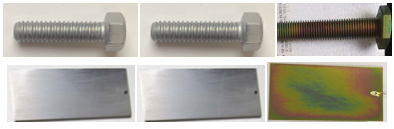
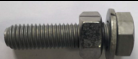
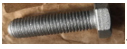
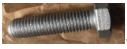
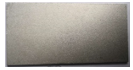
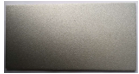
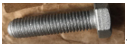
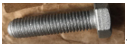
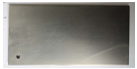
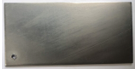
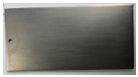
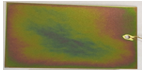
Panels were processed by rack plating at 1 A/dm², 24 ℃ for 70 min. Bolts, washers and nuts were processed by barrel plating at 6 A/kg, 24 ℃ for 120 min. After clear/color passivation and sealing, appearance, thickness and composition are shown in Table 3.
Table 3 Appearance, Thickness and Composition of Zn-Ni Alloy Coating
Item | Result | ||
Appearance |
| ||
As-plated (silver-gray) | After LD-5812 passivation (silver-gray) | After LD-5835 passivation (iridescent) | |
Coating thickness | 10~15μm | ||
Nickel content in coating | 11.5~14.8% | ||
It can be seen from Table 3 that the as-plated Zn-Ni alloy is silver-gray. After passivation and sealing, silver-gray and colorful appearances can be obtained. The coating contains 11.5–14.8% nickel with thickness of 10–12 μm. In comparison, Dacromet coating in our company is silver-gray, containing 80% zinc and aluminum with the rest chromate, and thickness of 10–12 μm. Therefore, Zn-Ni alloy coating can completely replace Dacromet coating in terms of appearance and thickness.
2.2 Coating Adhesion
Two methods were used for adhesion test: bending test and thermal shock test.
2.2.1 Bending Test
Three panels were processed by rack plating at 1 A/dm², 24 ℃ for 70 min. Coating thickness: 10–15 μm; nickel content: 11.5–14.8%. After drying, the panels were bent 90°. No peeling or flaking was observed at the bent area. Adhesion passed the test.
2.2.2 Thermal Shock Test
Three sets of bolts, washers and nuts were processed by barrel plating at 6 A/kg, 24 ℃ for 120 min. Coating thickness: 10–15 μm; nickel content: 11.5–14.8%. After drying, they were kept at 200 ℃ for 2 hours and immediately quenched in cold water. No blistering or peeling was observed. Adhesion passed the test.
2.3 Coating Hardness
Three panels were processed by rack plating at 1 A/dm², 24 ℃ for 150 min. Appearance: silver-gray; thickness: 30–35 μm; nickel content: 12.5–14.2%. Microhardness was tested after drying. Results are shown in Table 4.
Table 4 Hardness of Zn-Ni Alloy Coating
No. | Hardness (HV0.2) | Average (HV0.2) |
1# | 312 310 309 308 311 | 310 |
2# | 318 316 314 315 317 | 316 |
3# | 316 314 312 313 315 | 314 |
It can be seen from Table 4 that the hardness of Zn-Ni alloy coating reaches 300 HV, with good wear resistance, which greatly reduces coating damage during assembly and improves corrosion resistance (service life). This is a significant advantage over Dacromet coating with hardness of only 2H.
2.4 Corrosion Resistance
Panels were processed by rack plating at 1 A/dm², 24 ℃ for 70 min. Bolts, washers and nuts were processed by barrel plating at 6 A/kg, 24 ℃ for 120 min. Coating thickness: 10–15 μm; nickel content: 11.5–14.8%. After clear/color passivation and sealing, corrosion resistance was tested against Dacromet samples of similar thickness. Test samples: 3 panels and 3 bolts for each coating; 3 bolts assembled and disassembled 5 times; 1 set of bolt assemblies for each. Test method: GB/T 10125 Corrosion tests in artificial atmospheres – Salt spray tests.
2.4.1 NSS Test Sample Numbering and Requirements (Table 5)
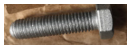
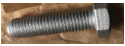
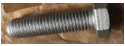
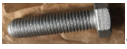
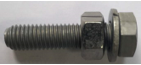
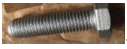
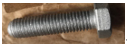
Table 5 Numbering, Diagram and Requirements of Corrosion Resistance Samples
No. | Coating Condition | Diagram | Requirement |
001 | Dacromet |
| NSS 1100h |
002 | Dacromet |
| NSS 1100h |
003 | Dacromet |
| NSS 1100h |
004 | Dacromet, assembled & disassembled |
| NSS 1100h |
005 | Dacromet, assembled & disassembled |
| NSS 1100h |
006 | Dacromet, assembled & disassembled |
| NSS 1100h |
013 | Dacromet |
| NSS 1100h |
014 | Dacromet |
| NSS 1100h |
015 | Dacromet |
| NSS 1100h |
028 | Zn-Ni alloy (clear passivation) |
| NSS 1100h |
029 | Zn-Ni alloy (clear passivation) |
| NSS 1100h |
030 | Zn-Ni alloy (clear passivation) |
| NSS 1100h |
031 | Zn-Ni alloy (clear passivation), assembled & disassembled |
| NSS 1100h |
032 | Zn-Ni alloy (clear passivation), assembled & disassembled |
| NSS 1100h |
033 | Zn-Ni alloy (clear passivation), assembled & disassembled |
| NSS 1100h |
034 | Zn-Ni alloy (clear passivation) |
| NSS 1100h |
035 | Zn-Ni alloy (clear passivation) |
| NSS 1100h |
036 | Zn-Ni alloy (clear passivation) |
| NSS 1100h |
049 | Zn-Ni alloy (color passivation) |
| NSS 1100h |
050 | Zn-Ni alloy (color passivation) |
| NSS 1100h |
051 | Zn-Ni alloy (color passivation) |
| NSS 1100h |
2.4.2 NSS Test Results (Table 6)
Table 6 NSS Test Results after 1100 Hours
Sample Name | Sample No. | Corrosion Appearance | |||||||
120h | 240 h | 360 h | 480h | 600 h | |||||
Bolt | 001 | 8% white corrosion products | 10% white corrosion products | 10% white corrosion products | 15% white corrosion products | 15% white corrosion products | |||
002 | 8% white corrosion products | 10% white corrosion products | 12% white corrosion products | 15% white corrosion products | 15% white corrosion products | ||||
003 | 8% white corrosion products | 10% white corrosion products | 10% white corrosion products | 15% white corrosion products | 15% white corrosion products | ||||
004 | 8% white corrosion products | 5% rust on the washer, and 10% white corrosion products on the bolt and nut | 15% rust on the washer, and 12% white corrosion products on the bolt and nut | 30% rust on the washer, and 12% white corrosion products on the bolt and nut | 40% rust on the washer, and 15% white corrosion products on the bolt and nut | ||||
005 | 8% white corrosion products | 10% white corrosion products | 12% white corrosion products | 15% white corrosion products | 15% white corrosion products | ||||
006 | No corrosion | 8% white corrosion products | 12% white corrosion products | 15% white corrosion products | 15% white corrosion products | ||||
028 | No corrosion | No corrosion | No corrosion | No corrosion | No corrosion | ||||
029 | No corrosion | No corrosion | No corrosion | No corrosion | No corrosion | ||||
030 | No corrosion | No corrosion | No corrosion | No corrosion | No corrosion | ||||
031 | No corrosion | No corrosion | No corrosion | No corrosion | No corrosion | ||||
032 | No corrosion | No corrosion | No corrosion | No corrosion | No corrosion | ||||
033 | No corrosion | No corrosion | No corrosion | No corrosion | No corrosion | ||||
Test panel | 013 | No corrosion | 3% white corrosion products | 3%white corrosion products | 5%white corrosion products | 8%white corrosion products | |||
014 | No corrosion | 2%white corrosion products | 3%white corrosion products | 5%white corrosion products | 8%white corrosion products | ||||
015 | No corrosion | No corrosion | 2%white corrosion products | 5%white corrosion products | 8%white corrosion products | ||||
034 | No corrosion | No corrosion | No corrosion | No corrosion | No corrosion | ||||
035 | No corrosion | No corrosion | No corrosion | No corrosion | No corrosion | ||||
036 | No corrosion | No corrosion | No corrosion | No corrosion | No corrosion | ||||
049 | No corrosion | No corrosion | No corrosion | No corrosion | No corrosion | ||||
050 | No corrosion | No corrosion | No corrosion | No corrosion | No corrosion | ||||
051 | No corrosion | No corrosion | No corrosion | No corrosion | No corrosion | ||||
Sample Name | Sample No. | Corrosion Appearance | |||||||
720h | 840 h | 960 h | 1100 h | ||||||
Bolt | 001 | 20%white corrosion products | 30%white corrosion products | 45%white corrosion products | 60%white corrosion products | ||||
002 | 20%white corrosion products | 30%white corrosion products | 45%white corrosion products | 60%white corrosion products | |||||
003 | 20%white corrosion products | 30%white corrosion products | 45%white corrosion products | 60%white corrosion products | |||||
004 | Washer55%Rust,Bolt20%white corrosion products,Nut5%Rust,15%white corrosion products | Washer65%Rust,Bolt35%white corrosion products,Nut20%Rust,20%white corrosion products | Washer85%Rust,Bolt50%white corrosion products,Nut35%Rust,30%white corrosion products | Washer95%Rust,Bolt60%white corrosion products,Nut45%Rust,40%white corrosion products | |||||
005 | 25%white corrosion products | 35%white corrosion products | 50%white corrosion products | 60%white corrosion products | |||||
006 | 25%white corrosion products | 35%white corrosion products | 50%white corrosion products | 60%white corrosion products | |||||
028 | No corrosion | No corrosion | No corrosion | No corrosion | |||||
029 | No corrosion | No corrosion | No corrosion | No corrosion | |||||
030 | No corrosion | No corrosion | No corrosion | No corrosion | |||||
031 | No corrosion | No corrosion | No corrosion | 2%white corrosion products | |||||
032 | No corrosion | No corrosion | No corrosion | 1%white corrosion products | |||||
033 | No corrosion | No corrosion | No corrosion | 1%white corrosion products | |||||
Test panel | 013 | 10%white corrosion products | 15%white corrosion products | 20%white corrosion products | 20%white corrosion products | ||||
014 | 10%white corrosion products | 12%white corrosion products | 15%white corrosion products | 15%white corrosion products | |||||
015 | 8%white corrosion products | 8%white corrosion products | 10%white corrosion products | 10%white corrosion products | |||||
034 | No corrosion | No corrosion | No corrosion | No corrosion | |||||
035 | No corrosion | No corrosion | No corrosion | No corrosion | |||||
036 | No corrosion | No corrosion | No corrosion | No corrosion | |||||
049 | No corrosion | No corrosion | No corrosion | No corrosion | |||||
050 | No corrosion | No corrosion | No corrosion | No corrosion | |||||
051 | No corrosion | No corrosion | No corrosion | No corrosion | |||||
Thus, it can be seen that the electroplated Zn‑Ni alloy coatings on test panels and fasteners, after clear passivation/color passivation and sealing, show no corrosion products after 1100 hours of NSS neutral salt spray testing before assembly. After repeated assembly and disassembly, the Zn‑Ni alloy fasteners with clear passivation and sealing suffer slight coating damage, and only less than 3% white corrosion products appear after 1100 hours of NSS testing, with no red rust observed.
Dacromet coatings of the same thickness on test panels and fasteners (unassembled) exhibit 10%–60% white corrosion products after 1100 hours of NSS testing. After repeated assembly and disassembly, Dacromet fasteners are severely damaged due to low coating hardness and poor wear resistance. After only 120 hours of NSS testing, 8% white corrosion products appear; after 240 hours, 5% rust occurs on the washers; and after 1100 hours, 45%–95% rust appears on the washers and nuts, along with 60% white corrosion products on the bolts.
Therefore, the Zn‑Ni alloy process demonstrates outstanding advantages for application on special vehicle fasteners.
3 Conclusion
Based on the above experimental results and performance comparison with Dacromet coating, it can be seen that the Zn-Ni alloy coating has a hardness > 300 HV, excellent adhesion, and far superior NSS neutral salt spray resistance compared with Dacromet coating.
Zn-Ni alloy coatings on test panels and fasteners, after clear passivation/color passivation and sealing, show no corrosion products after 1100 hours of NSS testing before assembly. After repeated assembly and disassembly, Zn-Ni alloy fasteners with clear passivation and sealing show slight coating damage, with only less than 3% white corrosion products and no red rust after 1100 hours of NSS testing.
Dacromet coatings on test panels and fasteners (unassembled) exhibit 10%–60% white corrosion products after 1100 hours of NSS testing. After repeated assembly and disassembly, Dacromet fasteners are severely damaged due to low coating hardness and poor wear resistance. After 120 hours of NSS testing, 8% white corrosion products appear; after 240 hours, 5% rust occurs on washers; after 1100 hours, 45%–95% rust appears on washers and nuts, and 60% white corrosion products on bolts.
Unassembled Dacromet fasteners show corrosion products after 1100 hours of NSS testing, while fasteners assembled and disassembled 5 times show only less than 3% white corrosion products with no red rust.
Therefore, this Zn-Ni alloy process is an ideal replacement for the Dacromet process for special vehicle fasteners in our company.