

High-technology Enterprise、SRDI Enterprise
 current location:home > Process documents
重庆立道新材料科技有限公司 2026-06-02 09:44:13 阅览101
Author: Mo Xinlu, Technical Department
Abstract
As a key component in electrochemical processes, platinum-plated anodes have attracted extensive attention due to their long service life, high current density and low energy consumption. This paper systematically discusses the performance advantages, application fields, preparation methods and modification technologies of platinum-plated anodes, summarizes their application status and existing challenges, and prospects the future development directions.
Keywords: platinum-plated anode; performance advantages; preparation methods; application status; prospect
1.Introduction
In the field of electrochemistry, the anode is an essential part of electrolysis and electroplating systems, and its performance exerts a crucial impact on the energy conversion efficiency of the entire system. Platinum, as a precious metal, possesses excellent electrochemical stability and high corrosion resistance, making it widely used as an anode material. Despite the favorable performance of platinum in numerous electrochemical applications, its high cost and scarcity limit its large-scale popularization. Platinum-plated anodes deliver performance comparable to pure platinum anodes at a much lower manufacturing cost, enabling them to replace pure platinum anodes for wide application in electroplating production. This paper systematically elaborates on the performance advantages, application fields, preparation methods and modification technologies of platinum-plated anodes, comprehensively evaluates their domestic and international application status and existing problems, and forecasts their future development trends.
2.Research Background
The application of precious metals as anodes in electrochemistry has a long history. Platinum has been used alongside insoluble anodes in electrochemistry owing to its exceptional stability in chemical and electrochemical reactions. Around the 1950s, with the large-scale development of the titanium industry, precious metal-coated anodes with titanium substrates featuring excellent alkali resistance were developed. In 1959, ICI invented the platinum-plated titanium electrode, initially serving as an anode for cathodic corrosion protection and soon being widely adopted in the electrochemical industry. In 1967, Dr. Beer invented an anode by coating titanium substrates with a mixed oxide of ruthenium oxide and titanium oxide, which greatly enhanced the performance of titanium-based insoluble anodes.
In recent years, driven by the demand for product quality and high-speed production, the application of long-service-life insoluble anodes has expanded rapidly. In response to the requirements for "green materials" including energy conservation, material saving and environmental friendliness, platinum-plated anodes with long service life and electrochemical catalytic activity that lower the activation energy of electrode reactions are in great market demand.
3.Classification and Performance Advantages of Platinum-Plated Anodes
Platinum-plated anodes are categorized into two types based on substrates: ordinary metal substrates and rare metal substrates. Ordinary metal substrates include iron and its alloys, nickel and its alloys, and copper and its alloys; rare metal substrates cover titanium, molybdenum, tantalum, niobium and other metals. Ordinary metals have the merits of abundant reserves, simple processing and easy pre-plating treatment, yet they are inferior to rare metals in acid and alkali corrosion resistance, high-temperature resistance and high-temperature strength. Current research on platinum-plated anodes mainly focuses on titanium, molybdenum, tantalum and niobium substrates. Titanium-based platinum-plated anodes are the most extensively studied, with commercial products including platinum-plated titanium alloy rods, titanium meshes, titanium plates and titanium felts.
Compared with conventional soluble and insoluble anodes, platinum-plated anodes have the following superior properties:
(1)Long service life: Platinum-plated anodes far outperform traditional soluble anodes such as graphite, stainless steel and lead-tin anodes in service life, attributed to their special structure and preparation technology that endow them with outstanding corrosion resistance.
(2)High current density: Featuring high electrical conductivity and stability, platinum-plated anodes can operate under high current density and accelerate the rate of electrochemical reactions.
(3)Low energy consumption: Their superior stability and electrical conductivity reduce surface corrosion and oxidation reactions, thereby cutting down the energy consumption of electrochemical processes.
(4)Minimal impact on plating solutions and coatings: With excellent acid, alkali and corrosion resistance, platinum-plated anodes hardly contaminate plating solutions in most acidic or alkaline environments, avoiding coating defects such as blackening, roughening and granular surface inclusions.
4. Applications of Platinum-Plated Anodes
4.1 Application in Electroplating
Conventional insoluble anodes in electroplating mainly include graphite, stainless steel, nickel and lead anodes. Although these anodes have decent corrosion resistance and electrical conductivity, they dissolve slightly during electrolysis, contaminating plating solutions and coatings. Additionally, their high specific gravity and low mechanical strength pose challenges to structural design and practical application.
Platinum-plated anodes surpass traditional soluble anodes in electrical conductivity, corrosion resistance and plating solution compatibility in conventional metal electroplating. For instance, the combined use of platinum-plated titanium meshes and cadmium plates in cadmium electroplating effectively prevents the passivation of cadmium plates. In chromium electroplating, platinum-plated electrodes show a much lower corrosion rate than lead and lead-tin alloy anodes. In precious metal electroplating (gold, silver, palladium and platinum plating), they exhibit better electrical conductivity and lower plating solution contamination than ordinary insoluble anodes, replacing pure gold, pure platinum and pure silver anodes to save substantial precious metal resources. They are also widely applied in galvanization, electroforming and Vertical Continuous Plating (VCP) production lines.
4.2 Application in Cathodic Protection
Platinum-plated anodes are ideal materials for the corrosion protection of engineering structures in seawater, fresh water and soil. China’s cathodic protection industry has achieved considerable development with expanding application scope, covering warships, dock projects, circulating cooling water systems and condenser systems of coastal power plants, underground and underwater pipelines, cables, and oilfield production facilities. Platinum-plated anodes are primarily recommended for seawater environments.
The platinum consumption rate is 6 mg/(A·a) in seawater, while it rises sharply to 175~200 mg/(A·a) in soil. This is because oxygen evolution or co-evolution of chlorine and oxygen occurs on the anode surface in soil, and the strongly acidic environment generated by oxygen evolution accelerates platinum dissolution. When used in soil, platinum-plated anodes require close contact with carbonaceous backfill to reduce direct electrochemical reactions on the anode surface. Due to the high price, high consumption rate and increasing grounding resistance over time, platinum-plated anodes are less widely used in soil than cast silicon iron and graphite anodes.
Cathodic protection mitigates or eliminates metal corrosion by applying direct current or sacrificial anodes to polarize the protected metal as a cathode. Seawater is a complex solution containing various salts, leading to sophisticated electrode and solution reactions:
Anode reaction:2Cl-→Cl2+2e
Cathode reaction:2H2O+2e →H2+2OH-
Solution reactions:Cl2+H2O →HClO+Cl-+H+ ;HClO→ H++ClO-
Oxygen evolution and redox reactions of manganese ions also occur on the anode. Chlorine produced reacts with water to form hypochlorous acid and hydrochloric acid, increasing surface acidity and accelerating the failure of ordinary anodes in seawater. Titanium-based platinum-plated electrodes remain corrosion-free even with surface pores, making them highly suitable for marine cathodic protection.
4.3 Application in Ionized Water Electrolysis
Research on ionized water is mature in Japan and actively developing in China. Acidic ionized water is widely used for disinfection and sterilization, while alkaline ionized water serves as drinking water. Platinum-plated electrodes adopted as cathodes or anodes of ionized water machines allow frequent polarity switching, extending electrode service life and removing surface contaminants to ensure stable water quality. Compared with other electrodes, platinum-plated electrodes enable a wider pH range: the pH of acidic ionized water reaches 4.32, and alkaline ionized water reaches 9.92.
Platinum-plated electrodes are also applied in Solid Polymer Electrolyte (SPE) water electrolysis for hydrogen and oxygen production, a technology developed by General Electric Company in the late 1950s. SPE hydrogen production boasts high gas purity, low maintenance cost, no corrosive liquid discharge and zero environmental pollution, outperforming other on-site hydrogen production technologies.
4.4 Other Applications
Platinum-plated electrodes are extensively used in the electrolytic preparation of hydrogen peroxide, hydrogen sulfide, perchlorate and hypochlorite. They also play important roles in seawater desalination, organic electrolytic synthesis, wastewater treatment and battery electrode manufacturing. With the development of China’s light industry and material science, platinum-plated materials with high strength, excellent corrosion resistance, electrical conductivity and catalytic activity will gain broader application prospects.
5. Preparation Methods and Modification Technologies of Platinum-Plated Anodes
The main preparation methods for platinum-plated anodes include metallurgical processing, magnetron sputtering, chemical vapor deposition, electrochemical redox and chemical redox methods, all of which support large-scale production and yield high-performance anodes.
Platinum composite anodes are fabricated via extrusion, drawing and rolling. The products feature high bonding strength, uniform and low-porosity platinum layers with controllable thickness. Rare metals such as titanium, niobium and tantalum are prone to surface oxidation, so the interface between platinum and the substrate must be processed under oxygen-isolated conditions.This method faces challenges in large composite ratio processing. Only micron-thick platinum layers are required for practical use, yet the ultra-thin platinum layers are easily scratched during the processing of composite wires and rods. Measures such as jacket extrusion, high-performance lubricants and strict control of element diffusion between jacket materials and platinum layers are adopted. Nevertheless, metallurgical processing cannot produce platinum layers thinner than 10 μm, struggles with complex-shaped anodes, and requires stringent processing conditions for oxidation-prone metals like titanium.
Platinum atoms are bombarded from platinum targets and deposited on substrate surfaces under electromagnetic fields to form platinum films. The platinum grains prepared by this method are nanoscale, accumulating in an uneven peak-like morphology, distinct from the spherical particle morphology of electroplated platinum. Practical verification proves that magnetron sputtered platinum composite electrodes have a longer service life than those prepared by aqueous electroplating.
Platinum acetylacetonate is heated to sublimation temperature in an electric furnace. The vapor is carried by argon to preheated substrates and thermally decomposed to deposit platinum. Oxygen is introduced to react with carbon and hydrogen by-products, generating carbon monoxide, carbon dioxide and water vapor, which are continuously discharged by a vacuum pump. Research on platinum CVD is mainly conducted by Ultramet Company, NASA Lewis Research Center and JPL Laboratory in the United States.
Platinum salts are reduced to elemental platinum and deposited on cathodes in molten salt or aqueous solution by applying electric current. This method produces uniform, dense platinum layers with high bonding strength, unaffected by workpiece shape and allowing customizable coating thickness.
Our company adopts acidic platinum plating solution LD-7565 and alkaline platinum plating solution LD-7566 to obtain high-quality platinum coatings on insoluble anodes. LD-7566 acidic pure platinum plating yields uniform and dense coatings with stable plating solution, simple operation and fast plating speed. LD-7565 alkaline pure platinum plating delivers high-purity coatings with good aluminizing performance, stable plating solution, excellent throwing power, long service life and up to 10 μm thick platinum coatings.
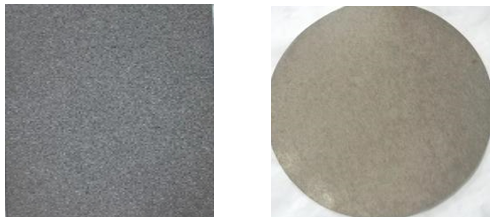
Figure 1 Platinum-plated titanium felt

Figure 2 Platinum-plated titanium plate
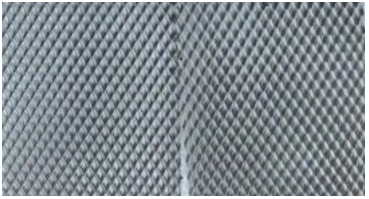
Figure 3 Platinum-plated titanium mesh
Reducing agents such as hydrazine and sodium borohydride are used to deposit platinum on catalytically active surfaces. Compared with electroplating, this method features simple operation, superior uniformity, bonding strength and denser fine grains with low porosity. Its main drawbacks are slow plating speed and poor plating solution stability.
Modification of platinum-plated anodes adopts surface coating and doping to further enhance electrical conductivity, corrosion resistance and structural stability. Current electroplated platinum layers already meet basic anode performance requirements, and relevant modification research is relatively limited.
6. Existing Challenges of Platinum-Plated Anodes
Despite their outstanding advantages, the large-scale application of platinum-plated anodes is constrained by the following problems:
Shortage of raw materials: China is deficient in platinum group metal resources and highly reliant on imports. Global platinum reserves are highly concentrated in South Africa and Russia; South Africa holds 63,000 tons, accounting for 90.9% of global reserves. China has discovered 47 platinum group metal deposits with a total reserve of 402 tons, mainly distributed in Gansu, Yunnan, Sichuan and Henan. By 2020, China’s cumulative platinum import reached 87.15 tons (a year-on-year increase of 23.34%), and palladium imports hit 31.88 tons (a year-on-year increase of 93.55%). Affected by the COVID-19 pandemic and complex international geopolitics, the cost of platinum group raw materials keeps rising.
Defects in plating formulas: The mainstream platinum plating processes include alkaline P-salt plating, acidic sulfamate plating, sulfate plating, cyanide molten salt plating and electroless platinum plating, all with inherent limitations. P-salt plating involves complex preparation and limited coating thickness; cyanide molten salt plating causes severe environmental pollution, complicated processes, high costs and is unsuitable for large-area workpieces; acidic sulfamate plating requires high operating temperature and regular plating solution replacement; sulfate plating suffers from low current efficiency and complicated platinum salt preparation; electroless platinum plating is plagued by poor plating solution stability. The imperfections of existing formulas hinder the large-scale industrial production of platinum-plated anodes.
Limitations of plating processes: Pre-treatment of rare metal substrates mainly adopts sandblasting and conversion film treatment. Platinum plating on conversion films generally suffers from poor bonding strength, while sandblasted platinum layers below a certain thickness have porosity that impairs service performance. Complex workpieces are unsuitable for sandblasting and require costly vacuum plating, restricting widespread application.
Environmental pollution pressure: Driven by the national advocacy of green electroplating and sustainable development, highly polluting processes such as cyanide-based platinum and silver plating are being phased out. It is urgent to optimize production processes to reduce costs and improve environmental friendliness.
7. Future Research Directions and Development Trends
As an important electrochemical material with excellent electrical conductivity and corrosion resistance, platinum-plated anodes will witness the following research and development trends:
(1)Optimization of electrochemical performance: Optimize material composition, structure and surface treatment to improve stability and corrosion resistance, and reduce charge transfer impedance.
(2)Development of novel anode materials: Explore nano-structured and composite platinum-plated anode materials for enhanced electrochemical performance and corrosion resistance.
(3)Expansion of application fields: Break the current application scope limited to batteries, electroplating and photoelectrochemistry, and expand to fuel cells, photoelectrochemistry and biomedicine.
(4)Development of eco-friendly preparation methods: Explore green preparation technologies utilizing renewable energy and biological templates to reduce environmental impact.
(5)In-depth study on electrochemical reaction mechanism: Reveal the reaction mechanism of platinum-plated anodes to provide theoretical support for performance optimization.
(6)Application of nanotechnology: Apply nanotechnology to prepare nano platinum-plated anodes with higher electrochemical activity and stability for fuel cell applications.
(7)Development of green chemistry: Develop low-waste, low-energy-consumption and eco-sustainable platinum-plated anode technologies in line with green chemistry principles.
In summary, the future research and development of platinum-plated anodes involve multiple dimensions requiring continuous exploration and innovation. With technological progress and the emergence of new materials and methods, more breakthroughs in the research and application of platinum-plated anodes are expected.
References
[1] Zhang Yuping, Ju He, Wu Hongrang. Surface Technology[J].2004,33(6):67-68.
[2] Zhang Zhaoxian. Titanium Electrode Engineering[M]. Beijing: Metallurgical Industry Press,2003.
[3] Pan Huibo. Rare Metal Materials and Engineering,1991,20(4):61-62.
[4] Li Meichao, Ma Chun’an, Wu Qing, et al. Chemical World,2002,(8):408.
[5] Wang Yi, Li Yin’e, Ma Guang, et al. Nonferrous Metals,2002,Supplement:95-96.
[6] Huang Bafan. Rare Metal Materials and Engineering,1992,21(3):67.
[7] Pan Jianyue, Tao Zichun, Luo Qifu. Materials for Mechanical Engineering.2003,27(12).

