High-technology Enterprise、SRDI Enterprise
 current location:home > Process documents
重庆立道新材料科技有限公司 2026-06-02 11:06:56 阅览118
Author: Li Li, Bao Haisheng;Technical Department
Abstract
This paper elaborates on cyanide-free silver plating technology. The properties of the plating bath and silver deposit, including throwing power, covering power, current efficiency, bath stability, adhesion strength, sulfur resistance and solderability, were tested experimentally. The results show that the comprehensive performance of the bath and deposits of this cyanide-free silver plating process is excellent, comparable to that of traditional cyanide silver plating. The process has achieved good practical effects in industrial production and is expected to realize full cyanide-free transformation of silver plating technology in the next few years.
Keywords: cyanide-free silver plating; plating bath performance; coating performance; application
1. Preface
Silver is a silvery-white precious metal with excellent malleability, ductility and reflectivity, widely used as decorative coatings for musical instruments, tableware, jewelry and medals. Silver plating layers possess outstanding electrical conductivity and solderability, and are extensively applied in the manufacturing of electrical appliances, electronic products, communication equipment and precision instruments.
Cyanide-free silver plating is one of the most challenging processes among all cyanide-free electroplating technologies. China set off an upsurge of cyanide-free electroplating in the mid-1970s. In the early 1980s, the Ministry of Electronics organized major domestic connector manufacturers, led by Taiyuan No.2 Research Institute of the Ministry of Electronics, to tackle key technical problems of cyanide-free electroplating and silver tarnish resistance.
During that period, a variety of cyanide-free silver plating processes were developed in China, including thiosulfate silver plating, nicotinic acid silver plating, NS silver plating, succinimide silver plating and sulfosalicylic acid silver plating. However, most of these processes failed to achieve industrialization due to inherent drawbacks such as poor bath stability, unsatisfactory coating performance and inability to meet production requirements. Some were temporarily put into use but eventually replaced by cyanide silver plating again.
In recent years, with the enhancement of global environmental awareness, environmental protection regulations have become increasingly stringent in China and worldwide. Relevant Chinese authorities have mandated the phase-out of cyanide electroplating processes. Therefore, developing a stable cyanide-free silver plating process with excellent bath and coating performance and industrial application prospects is of great practical significance.
Through continuous technical research, our company successfully launched two mature cyanide-free silver plating processes in 2010: LD-7800 Cyanide-Free Matte Silver Process and LD-7805 Cyanide-Free Bright Silver Process. Nearly 12 years of mass production application has verified their superior overall performance, making them two of the most successful cyanide-free silver plating technologies at home and abroad. This paper introduces the performance tests of the plating bath and deposits as well as practical industrial applications of the two processes.
2、Bath Composition and Operating Conditions of Cyanide-Free Silver Plating Process
Table 1 Bath Composition and Optimum Operating Conditions of Cyanide-Free Silver Plating Process
Process Name | Bath Composition & Optimum Process Parameters | |
Pre-silver Plating | Silver Nitrate LD-7800Complexing Agent pH Temperature Cathode Current Densit | 1~3 g/L 250~350 ml/L 9~10.5 20~30 ℃ 0.05~0.1 A/dm2 |
process Name | Bath Composition & Optimum Process Parameters | |
Cyanide-Free Silver Plating | Silver Nitrate LD-7800M Complexing agent pH Temperature Cathode Current Densit | 25~30 g/L 500~700 ml/L 9~10.5 35~45 ℃ 0.3~1 A/dm2 |
Note: For bath preparation, dissolve silver nitrate in an appropriate amount of pure water first, add the corresponding complexing agent under stirring, supplement other required components, and dilute to the fixed volume with pure water.
3、Performance Test of Cyanide-Free Silver Plating Bath
3.1 Test of Operating Current Density Range
A 250 mL working solution of cyanide-free silver plating was used for Hull Cell test. The test parameters and panel results are shown in Table 2
Table 2 Hull Cell Test Panel Status of Cyanide-Free Silver Plating
Process | Figure | Process Conditions |
Cyanide-Free Matte Silver | | Current 0.25A Temperature:40℃ Air agitation time:5min |
The Hull Cell test results show that the coating crystal is fine and uniform at 0.25 A, presenting an even matte white color. The applicable current density range is 0.025~1.25 A/dm²。
3.2 Deposition Rate Test
The process temperature was controlled at 25 ℃. The silver coating thickness after 1 h electroplating under different current densities was recorded in Table 3
Table 3 Coating Thickness Record
time/h | Current Density/A/dm2 | Coating Thickness/μm | Average Thickness/μm | |||
1# | 2# | 3# | 4# | |||
1 1 | 0.25 0.5 | 10.97 21.38 | 10.49 21.35 | 9.96 22.97 | 9.60 22.81 | 10.25 22.13 |
Test conclusion: The deposition rate is 10.25 μm/h at 0.25 A/dm² and 22.13 μm/h at 0.5 A/dm²。
3.3 Cathode Current Efficiency Test
The test was carried out in accordance with JB/T 7704.3 Test Methods for Electroplating Solutions – Cathode Current Efficiency Test. The test principle is shown in Figure 1.
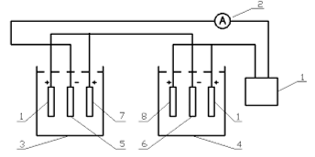
Figure 1 Schematic Diagram of Current Efficiency Determination by Coulometer
1-DC Power Supply 2- Ammeter 3-Test Plating Bath 4- Copper Coulometer 5 - Cathode of Test Sample 6- Copper Coulometer Cathode 7- Anode of Test Plating Bath 8-Copper Coulometer Anode
The weight gain of the copper coulometer and test sample under different current densities are listed in Table 4 and Table 5.
Table 4 Record of Copper Coulometer Test
No. | Temperature(℃) | time/min | Current Density/A/dm2 | Weight ofCopper Coulometer m0/g | ||
Before Test | After Test | Weight Gain | ||||
1 | 25 | 20 | 0.25 | 37.6890 | 37.7347 | 0.0457 |
2 | 25 | 20 | 0.5 | 36.7721 | 36.8533 | 0.0812 |
Table 5 Record of Test Sample Weight Gain
No. | Temperature(℃) | time/min | Current Density/A/dm2 | Weight of Copper Coulometer m0/g | ||
Before Test | After Test | Weight Gain | ||||
1 | 25 | 20 | 0.25 | 36.5296 | 36.6843 | 0.1547 |
2 | 25 | 20 | 0.5 | 38.9774 | 39.2525 | 0.2751 |
Cathode current efficiency formula:
 ,k=4.025。The current efficiency of the process is over 98%, reaching an extremely high level.
3.4 Covering Power Test
The test was conducted per JB/T 7704.2 Test Methods for Electroplating Solutions – Covering Power Test. A 10×100 mm copper tube wrapped with insulating tape was used as the test sample (Figure 2). The tube was cut longitudinally after electroplating to observe the inner silver coating distribution (Figure 3). The inner hole was completely covered by silver deposit, indicating excellent covering power of the cyanide-free silver plating process.
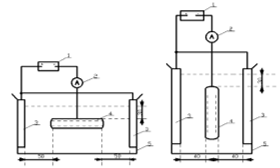
Figure 2 Schematic Diagram of Covering Power Test
1-DC Power Supply 2- Ammeter 3- Cathode 4- Anode 5- Electrolytic Cell
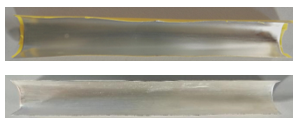
Figure 3 Silver Coating Distribution on Longitudinal Section of Inner Hole
3.5 Throwing Power Test
The test followed JB/T 7704.4 Test Methods for Electroplating Solutions – Throwing Power Test. Standard Hull Cell panels were adopted, and coating thickness at designated test points (Figure 4) was measured. The thickness data and calculated throwing power are shown in Table 6 and Table 7.
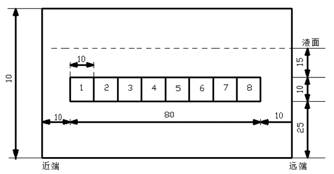
Figure 4 Layout of Thickness Test Points on Hull Cell Panel
Table 6 Coating Thickness at Middle Position of Each Area (μm)
Panel No. | Current/A | Thickness at each test point /μm | |||||||
δ1 | δ2 | δ3 | δ4 | δ5 | δ6 | δ7 | δ8 | ||
1 | 0.5 | 7.15 | 6.40 | 6.21 | 6.14 | 6.33 | 6.84 | 6.15 | 5.04 |
2 | 0.25 | 3.47 | 3.39 | 3.16 | 3.05 | 3.01 | 2.92 | 2.72 | 2.37 |
Table 7 Throwing Power(Ti=δi/δ1×100%)
Panel No. | Current /A | Throwing power at each pointμm | |||||||
T1 | T2 | T3 | T4 | T5 | T6 | T7 | T8 | ||
1 | 0.5 | 89.5% | 97.0% | 98.87% | 88.53% | 95.66% | 86% | 70.5% | |
2 | 0.25 | 97.69% | 93.21% | 96.51% | 98.68% | 97.0% | 93.15% | 87.13% | |
Test conclusion: The cyanide-free silver plating bath possesses excellent throwing power, especially under low current density.
3.6 Bath Stability Test
Aging and Consumption Test
Two portions of 500 mL standard bath were sealed in beakers: one placed outdoors under sunlight, the other kept indoors in a constant-temperature water bath at 50 ℃ for 8 hours daily. After 10 days, no blackening or turbidity was observed in either bath. Hull Cell tests showed no obvious difference compared with freshly prepared bath.
One liter of cyanide-free matte silver plating bath was operated for 5~6 hours daily for over one month, with distilled water supplemented to maintain liquid level. The bath turned blue due to impurity accumulation (Figure 5), with copper ion content up to 0.245 g/L and nickel ion content up to 0.052 g/L. Hull Cell verification showed no obvious deterioration in coating appearance and performance.
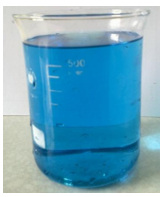
Figure 5 Bath Appearance after Accumulation of Cu and Ni Impurities
Professional impurity removal equipment was used to remove Cu2+ and Ni2+ from the contaminated bath (Figure 6). The equipment features high removal efficiency and renewable active adsorption media. After treatment, the bath returned to colorless and transparent status (Figure 7).
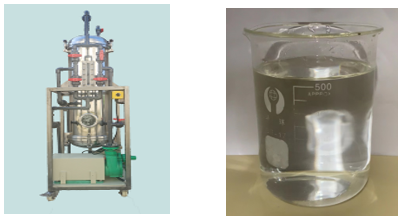
Figure 6 Equipment for Removal of Cu²⁺ and Ni²⁺ Impurities Figure 7 Bath Appearance after Cu and Ni Impurity Removal
4、Performance Test of Silver Plating Deposit
4.1 Coating Appearance
1 L LD-7800 working solution was added into the electrolytic cell, with a 5 cm×10 cm silver plate as anode and 5 cm×5 cm oxygen-free copper sheet as cathode.
Pre-plating: current density 0.08 A/dm², temperature 25 ℃, time 3 min.
Silver plating: current density 0.5 A/dm², temperature 40 ℃, time 40 min.
The panel was cleaned and dried, then inspected visually under natural scattered light (illumination ≥ 300 lux). The cyanide-free matte silver coating presents uniform matte white color with no blistering, blackening, streaking or fogging. The appearance is fully qualified.
4.2 Coating Adhesion Strength
Sample preparation conditions were consistent with 4.1. The test was implemented in accordance with SJ/T 11112-1996 Metallic Coatings – Test Methods for Silver and Silver Alloy Electroplated Coatings Part 2: Adhesion Test. No blistering, delamination or peeling was observed, indicating excellent adhesion strength. The result is qualified.
4.3 Tarnish Resistance Performance
At room temperature, cyanide silver coating and cyanide-free silver coating were immersed in 1% K2S solution respectively, and surface changes were recorded at different soaking time.
The tarnish resistance test results of the two coatings are shown in Table 8. It can be seen that the cyanide‑free silver plating layer exhibits better tarnish resistance than the cyanide silver plating layer.
Table 8 Tarnish Resistance of Different Silver Coatings in Potassium Sulfide Solution
Coating Type | Surface Status | ||||||
1min | 5min | 10min | 15min | 20min | 25min | 30min | |
Cyanide Silver Coating | No Change | Light Yellow | Yellowish Brown | Dark Brown | Dark Brown | Dark Brown | Dark Brown |
Cyanide-Free Silver Coating | No Change | No Change | Light Yellow | Light Yellow | Yellowish Brown | Yellowish Brown | Dark Brown |
The tarnish resistance of cyanide-free silver coating is superior to traditional cyanide silver coating.
4.4 Coating Solderability
Solderability is a key index for evaluating silver plating systems. The tensile method was adopted for testing and compared with cyanide silver plating (Figure 8).
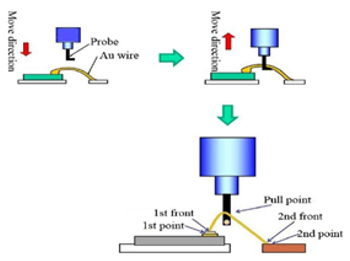
Figure 8 Schematic Diagram of Coating Solderability Test Principle
The solderability of the coating was tested by the tensile method, and a comparative experiment was carried out with the cyanide silver plating system. Figure 7 shows the schematic diagram of the test principle.
Table 9 presents the solderability measurement results of silver coatings prepared by the cyanide‑free silver plating process and the traditional cyanide silver plating process. It can be seen that the solderability of the coating obtained by the cyanide‑free silver plating system is basically consistent with that of the cyanide system.
Table 9 Solderability Test Results of Silver Coatings
Coating Type | Maximum Force /gf | Minimum Force /gf | Average Force /gf |
Cyanide-Free Silver Coating | 6.91 | 6.23 | 6.57 |
Cyanide Silver Coating | 6.87 | 6.33 | 6.60 |
4.5 High Temperature Resistance
The cyanide-free silver coating was baked at 190 ℃ for 5 hours (Figure 9). No obvious discoloration was found after high-temperature treatment, showing excellent high temperature resistance.
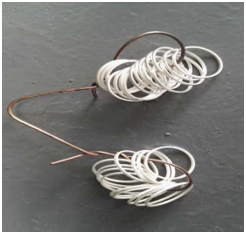
Figure 9 High Temperature Resistance Test Result of Cyanide-Free Silver Coating 4.6 Contact Resistance
The four-probe method was used to test contact resistance. Test specimen size: length 59.6 mm, width 50 mm, thickness 0.38 mm. The contact resistance of the silver coating is only 0.02 mΩ, reflecting outstanding electrical conductivity.
4.7 SEM Microscopic Morphology
SEM microscopic morphology analysis of cyanide-free silver coating was performed in accordance with GB/T 17359-2012 Microbeam Analysis – Quantitative Analysis by Energy Dispersive Spectroscopy. The result is shown in Figure 10.
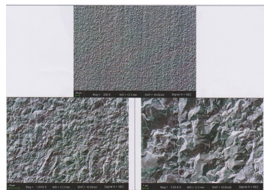
Figure 10 SEM Microscopic Morphology of Cyanide-Free Silver Coating
5、Application of Cyanide-Free Silver Plating
This series of cyanide-free silver plating processes have been widely promoted and applied in Chongqing, Guizhou, Sichuan, Shaanxi, Henan and other regions with satisfactory practical effects. In particular, LD-7800 matte silver process outperforms cyanide silver plating in many performance indicators.
Figure 11 shows barrel plating application: high-temperature alloy parts plated with LD-7800 matte silver on the left, stainless steel parts plated with LD-7805 bright silver on the right. After 8 hours × 6 cycles of baking at 730 ℃, the coating remains intact without blistering or peeling, featuring firm adhesion and uniform silvery-white appearanc.
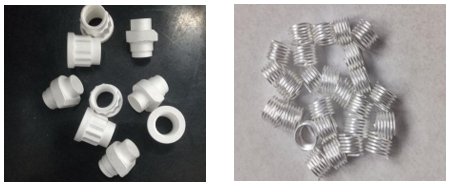
Figure 11 Application of Cyanide-Free Silver Plating in Barrel Plating
Benefiting from the high throwing power of the bath and excellent electrical properties and solderability of the silver coating, the process has broad applications in communication and electronics industries.
Figure 12 shows cyanide-free silver plating for microwave cavity: the coating is fine with uniform thickness distribution, and the thickness difference between high and low areas is less than 2 μm, far better than cyanide silver plating. Figure 13 presents its application in high-voltage electrical appliances.
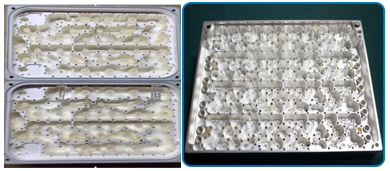
Figure 12 Cyanide-Free Silver Plating for Microwave Cavity
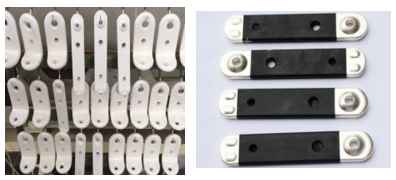
Figure 13 Application of Cyanide-Free Silver Plating in High-Voltage Electrical Appliances
6. Conclusion
Performance tests on LD-7800 matte silver and LD-7805 bright silver processes, including throwing power, covering power, current efficiency, bath stability, coating adhesion, sulfur resistance and solderability, verify that the comprehensive performance of the bath and deposits is excellent and comparable to traditional cyanide silver plating.
The process has replaced cyanide silver plating in industrial production for many years, fully meeting customer technical requirements. It possesses broad popularization and application prospects for full cyanide-free upgrading of silver plating industry.
References
[1] Zhang Yuncheng, Hu Runan, Xiang Rong. Electroplating Handbook[M]. National Defense Industry Press.
[2] Ning Yuantao, Zhao Huaizhi. Silver[M]. Changsha: Central South University Press, 2005.
[3] Wei Li'an. Cleaner Production Technology of Cyanide-Free Silver Plating[J]. Electroplating & Finishing, 2004, 23(5):27-29.
[4] He Jianping. Research Status and Solutions of Cyanide-Free Electroplating Process[J]. Electroplating & Finishing, 2005, 24(7):42-45.
[5] Liu Renzhi. Process and Technical Status of Cyanide-Free Silver Plating[J]. Electroplating & Finishing, 2006, 28(1):21-24.